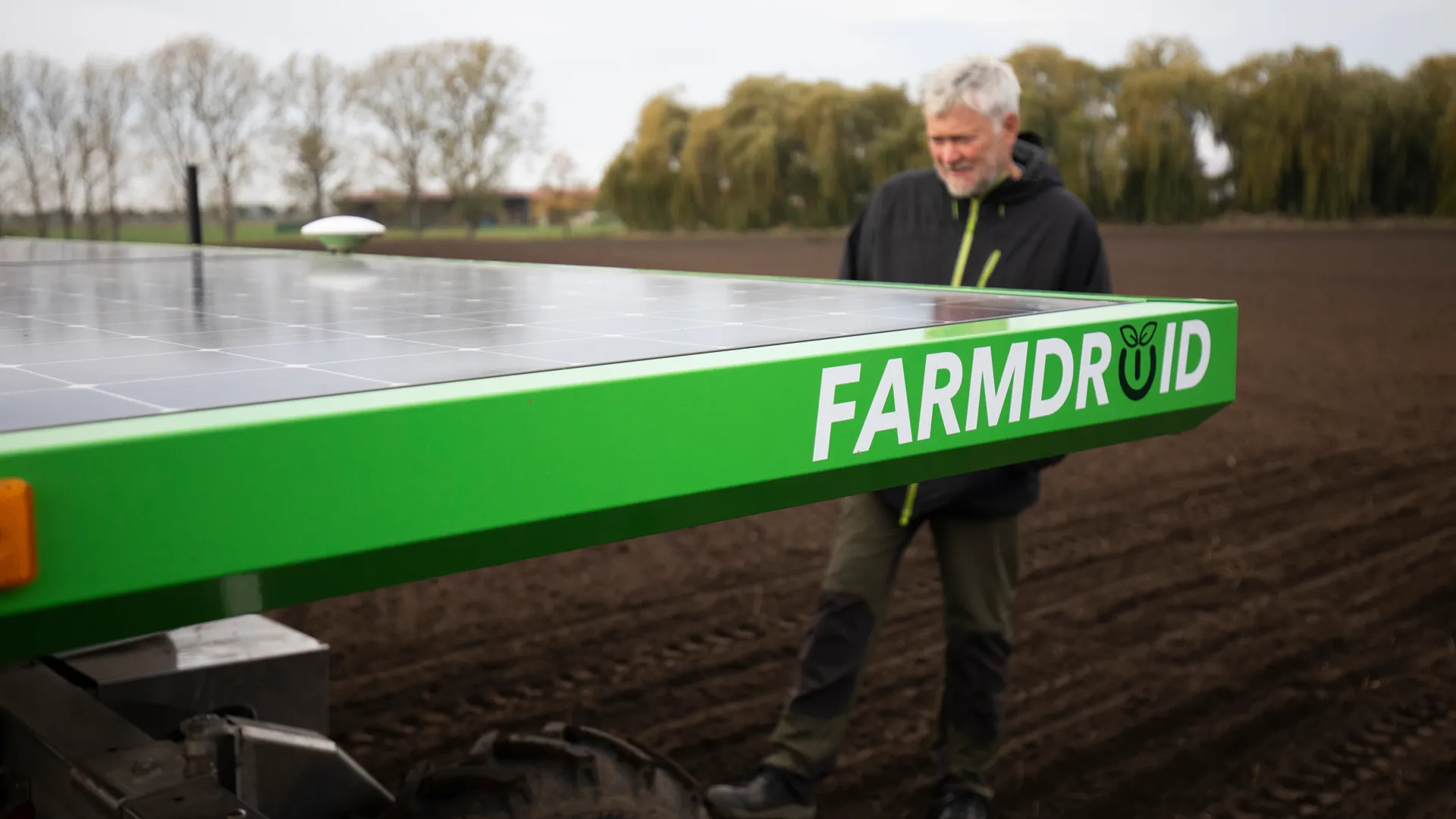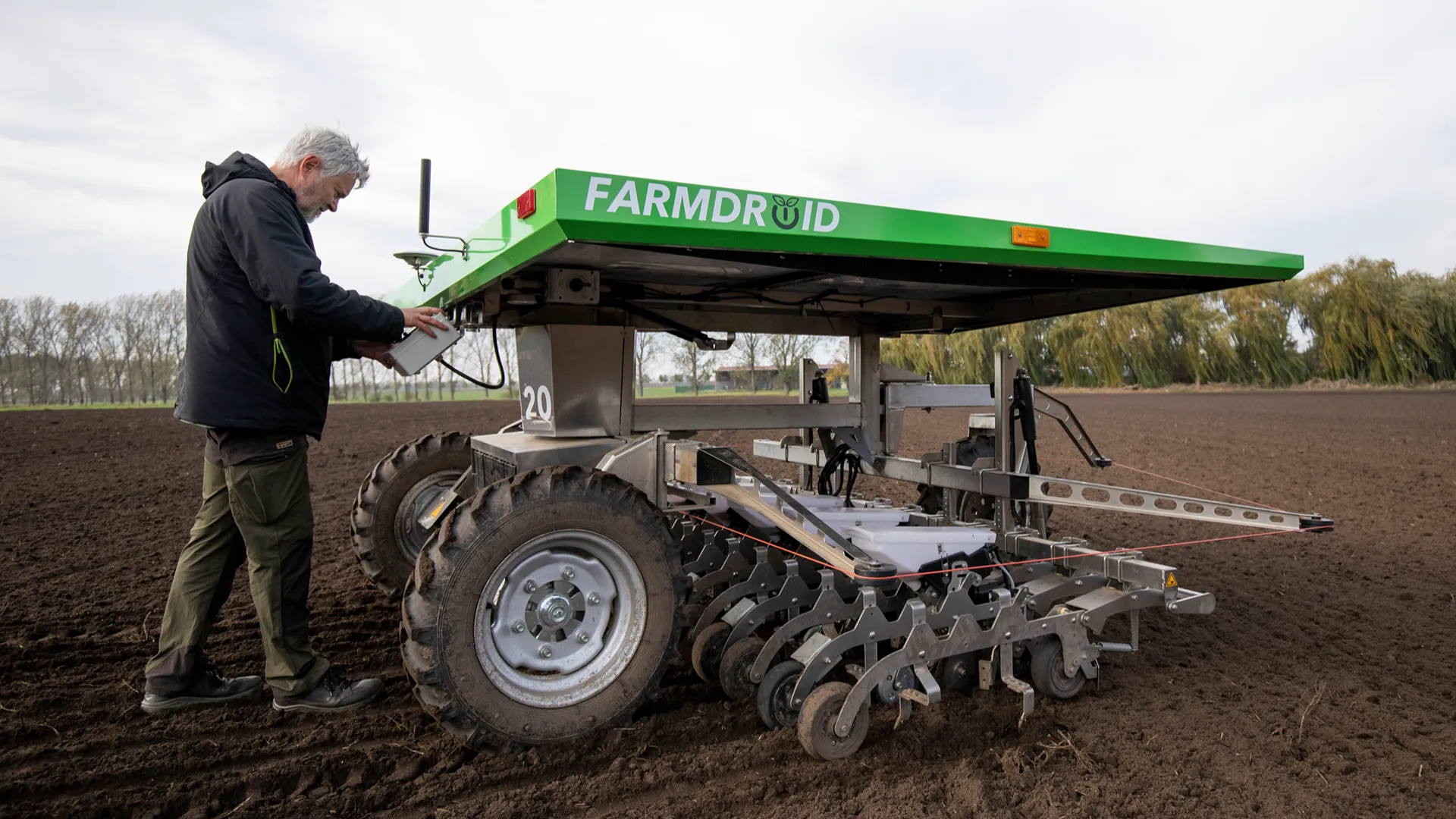
Another season is behind us. Across more than 500 FarmDroid FD20s working in 26 countries, most robots do the same steady job from harvest to harvest: sow in spring, weed through the summer, and do it again season by season. Most of that work looks the same from the outside, but a few robots pushed further than the rest this season.
The 2026 season’s records
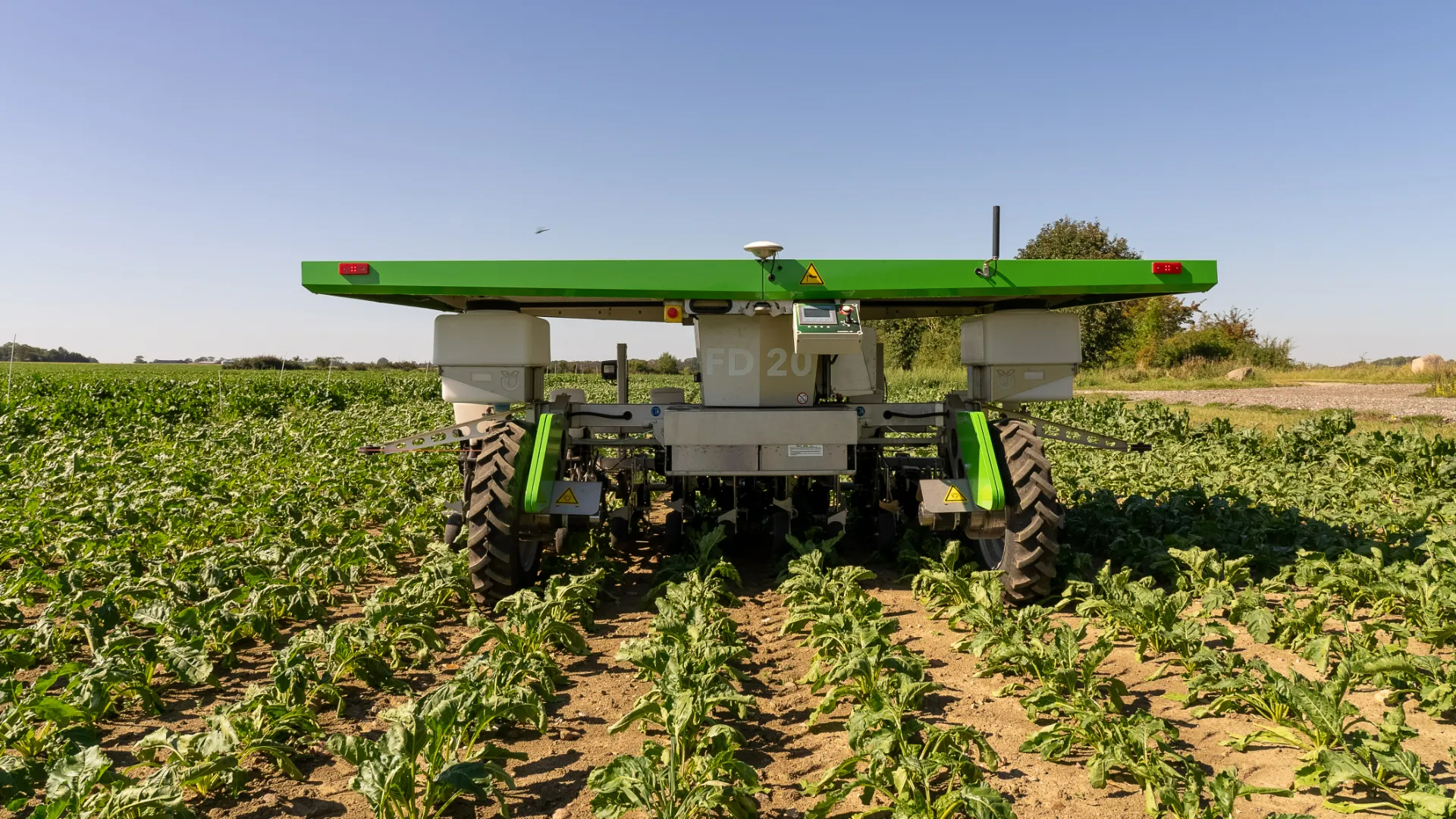
The record seeder. Simon Meirhaeghe’s robot in France sowed 77.7 hectares in a single season, covering more ground than any other in the fleet. This tireless robot sowed sugar beet, onion, red beet, and parsley. Seeding is where an FD20 sets the pattern for the whole year, placing every seed with 8 mm GPS precision so it knows exactly where to return and weed after seeding.
The record weeder. Weeding is the work that repeats, pass after pass, all summer. Over in the Netherlands, the busiest robot cleared 194.9 hectares of weeding across many passes of a 16-hectare sugar beet field, staying one step ahead of the weeds from even before the crops emerged.
The CO2 saver. Running on sunlight instead of diesel adds up. In Denmark, one FD20 avoided 3.0 tonnes of CO2 this season compared with conventional weeding. This specific robot sowed 59.46 ha and weeded 160 ha of quinoa, clover grass, grass seed, and flowers.
The frequent traveller. Some robots settle on one field for the season, others travel between fields to seed and weed different crops. In Poland at Piotr’s farm, one FD20 robot moved across 20 different fields, seeding and weeding 76 hectares of dill, parsley, chives, and spring onion. He has in total around 40 fields which he manages with three FarmDroid FD20s.
The rainy weather worker. Rain sends most machines back to the shed. Not this one. In Germany, one FD20 put in 44 hours this season in wet conditions, working while the weather kept everyone else out of the field. It can do this because the FD20 is lightweight, which gives it an edge over heavy machinery that would sink in wet soil.
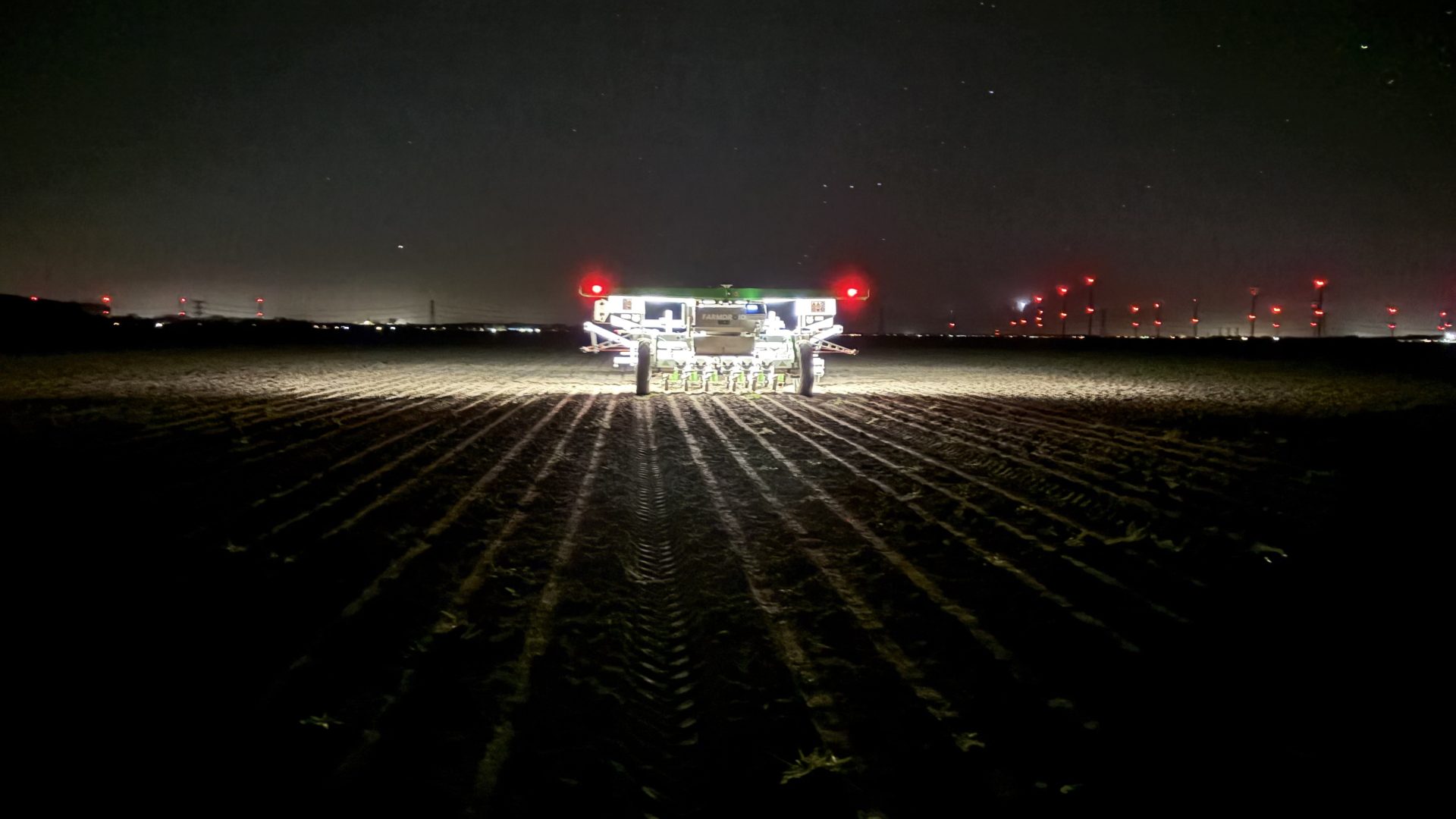
The night shifter. An FD20 needs no daylight, no driver, and no break. In France, one robot logged 420 hours of work between 18:00 and 06:00 while the farm slept.
The FarmDroid emperor. Not every record belongs to a robot. One grower in Denmark grew their FarmDroid fleet more than any other customer this year, running six FD20 robots across the farm for seeding 105.5 hectares and weeding 583.8 hectares of sugar beet.


The season at a glance
| Award | The record | Country |
| The record seeder | 77.7 ha sown | France |
| The record weeder | 194.9 ha weeded | Netherlands |
| The CO2 saver | 3.0 t CO2 avoided | Denmark |
| The frequent traveller | 20 fields worked | Poland |
| The rainy weather worker | 44 h in the rain | Germany |
| The night shifter | 420 h after dark | France |
| The FarmDroid emperor | 6 robots deployed | Denmark |
Still working after six seasons
The best record of all is not about a single season. It is about staying power. On Eberhard Weisskopf’s sugar beet farm in Germany, three FD20s went out to field every season and logged more than 18,000 operating hours after six seasons of seeding and weeding.
| Robot | Operating hours |
| FD20, built 2020 | 6,571 |
| FD20, built 2020 | 6,280 |
| FD20, built 2021 | 5,260 |
| Combined | 18,111 |
An FD20 works up to 24 hours a day in season and covers around 6 hectares a day, so that adds up to a lot of beet. The farm recently changed hands, and we are looking forward to seeing how the new owner runs these robots next season. Across every robot we have built, the fleet has now passed 929,000 operating hours, closing in on a million day by day.
If you are wondering what an FD20 would do in your own fields, you can build your own robot using FarmDroid configurator to get a quote. See you out there next season.