


Seeding season comes round quickly, and many farmers are already weighing up what to invest in for next year. The first question is usually what a robot costs. The more useful one is what you already spend seeding a row crop and keeping it clean, and what that would look like with a FarmDroid instead.
Every year we meet farmers who are ready to try something new, and farmers who want to see the detailed calculation first. This article is for the second group. If you are a farmer considering a field robot on your farm, hopefully you will feel confident in your investment decision once you are done reading this article.
Below are investment cases for an arable farmer, a dairy farmer, and a vegetable grower, organic and conventional, on smaller and larger fields.
How we calculated cost per hectare and payback
The robot’s annual cost is depreciation over 7 years down to a 20% residual value, plus interest, service, insurance, software, and maintenance. Today’s cost covers seeding, crop protection, inter-row weeding, and hand weeding, both machine and labour, from seeding to harvest, with harvest excluded. Payback is the investment minus residual value, divided by the annual saving. These are worked examples, so your farm’s numbers will differ.
Your own hours checking in on the robot and moving it between fields are not in this calculation. Nor is the petrol for the FD60’s Range Extender, which uses 1 to 1.5 litres per hectare when it runs.
| Cost item | Without FarmDroid | With FarmDroid |
| Seeding | ✓ | The robot does it |
| Crop protection | ✓ | Replaced by mechanical weeding |
| Inter-row weeding | ✓ | The robot does it |
| Hand weeding | ✓ | The robot does it |
| Depreciation, 7 years to 20% residual | – | ✓ |
| Interest | – | ✓ |
| Service | – | ✓ |
| Insurance | – | ✓ |
| Software | – | ✓ |
| Maintenance | – | ✓ |
| Harvest | Left out | Left out |
| Your own hours supervising and moving the robot | Left out | Left out |
| Fuel for the FD60 Range Extender | – | Left out |
✓ means the cost is counted in the figures. “Left out” means a real cost that the figures do not include.
Arable farmer, growing sugar beet and oilseed rape
If you are an arable farmer growing sugar beet and oilseed rape, your costs will likely look like this.
| Per hectare | Organic | Conventional |
|---|---|---|
| Seeding | €94 per ha | €94 per ha |
| Crop protection | €0 per ha | €643 per ha |
| Inter-row weeding | €459 per ha | €201 per ha |
| Hand weeding | €838 per ha | €0 per ha |
| Total cost today | €1,391 per ha | €938 per ha |
| FD20, 40 ha a year, costs €470/ha | €36,800 saved per year, payback 1.9 years | €18,700 saved per year, payback 3.8 years |
| FD60, 120 ha a year, costs €266/ha | €135,000 saved per year, payback 0.9 years | €80,700 saved per year, payback 1.5 years |
For an organic grower, 93% of today’s cost is weeding, and most of that is hand weeding. For a conventional grower, 69% of today’s costs is crop protection.
The 40 and 120 hectares come from seeding the two crops in different windows, not all the hectares at once. That is what lets one FarmDroid cover more ground across a season.
On this rotation an organic grower pays back in 1.9 years over 40 hectares and 0.9 years over 120. A conventional grower pays back in 3.8 years over 40 hectares and 1.5 over 120.
Anton Maier farms 145 hectares in Eitensheim, Bavaria, most of it conventional, with rapeseed and sugar beet grown organically. In his part of Bavaria, getting workers at the point in the season when the beet needs weeding is close to impossible. He bought an FD20 in 2020 and it is still on the organic block seven seasons later. “It does a good job,” he says.

Dairy farmer, growing fodder beet, maize and oilseed rape
If you are a dairy farmer growing fodder beet, maize and oilseed rape, your costs will likely look like this.
| Per hectare | Organic | Conventional |
|---|---|---|
| Seeding | €94 per ha | €94 per ha |
| Crop protection | €0 per ha | €389 per ha |
| Inter-row weeding | €697 per ha | €469 per ha |
| Hand weeding | €402 per ha | €0 per ha |
| Total cost today | €1,193 per ha | €952 per ha |
| FD20, 40 ha a year, costs €470/ha | €28,900 saved per year, payback 2.5 years | €19,300 saved per year, payback 3.7 years |
| FD60, 120 ha a year, costs €266/ha | €111,200 saved per year, payback 1.1 years | €82,300 saved per year, payback 1.4 years |
Inter-row weeding is the biggest cost here, in both columns, and organic growers spend about 50% more on it since there is no herbicide in the system and the passes have to do all the work.
On this rotation an organic grower pays back in 2.5 years over 40 hectares and 1.1 years over 120. A conventional grower pays back in 3.7 years over 40 and 1.4 over 120.
Tjele Gods, one of Denmark’s largest organic dairy farms, runs five FD20s across 93 hectares of fodder beet for 1,650 cows. “Our biggest challenge before FarmDroid was keeping the beet fields clean and the high cost of manual weeding,” says Steffen Rohde Døssing, Denmark. The fleet went from one robot to five in three seasons.
For a dairy farmer, the focus is on the herd, and in spring there are a lot of other tasks on the farm that take time. That is why automating the seeding and weeding of the feed crops with a FarmDroid would make a dairy farmer’s job easier.

Vegetable farmer, growing onions
If you are a vegetable farmer growing onions, your costs will likely look like this.
| Per hectare | Organic | Conventional |
|---|---|---|
| Seeding | €201 per ha | €201 per ha |
| Crop protection | €0 per ha | €777 per ha |
| Inter-row weeding | €697 per ha | €469 per ha |
| Hand weeding | €1,475 per ha | €0 per ha |
| Total cost today | €2,373 per ha | €1,448 per ha |
| FD20, 30 ha a year, costs €627/ha | €52,400 saved per year, payback 1.4 years | €24,600 saved per year, payback 2.9 years |
| FD60, 60 ha a year, costs €532/ha | €110,400 saved per year, payback 1.1 years | €54,900 saved per year, payback 2.2 years |
Onions are seeded in one window in spring, so the robot has one crop to work rather than two. This means fewer hectares, same annual cost, and higher cost per hectare.
On this crop an organic grower pays back in 1.4 years over 30 hectares and 1.1 years over 60. A conventional grower pays back in 2.9 years over 30 and 2.2 over 60.
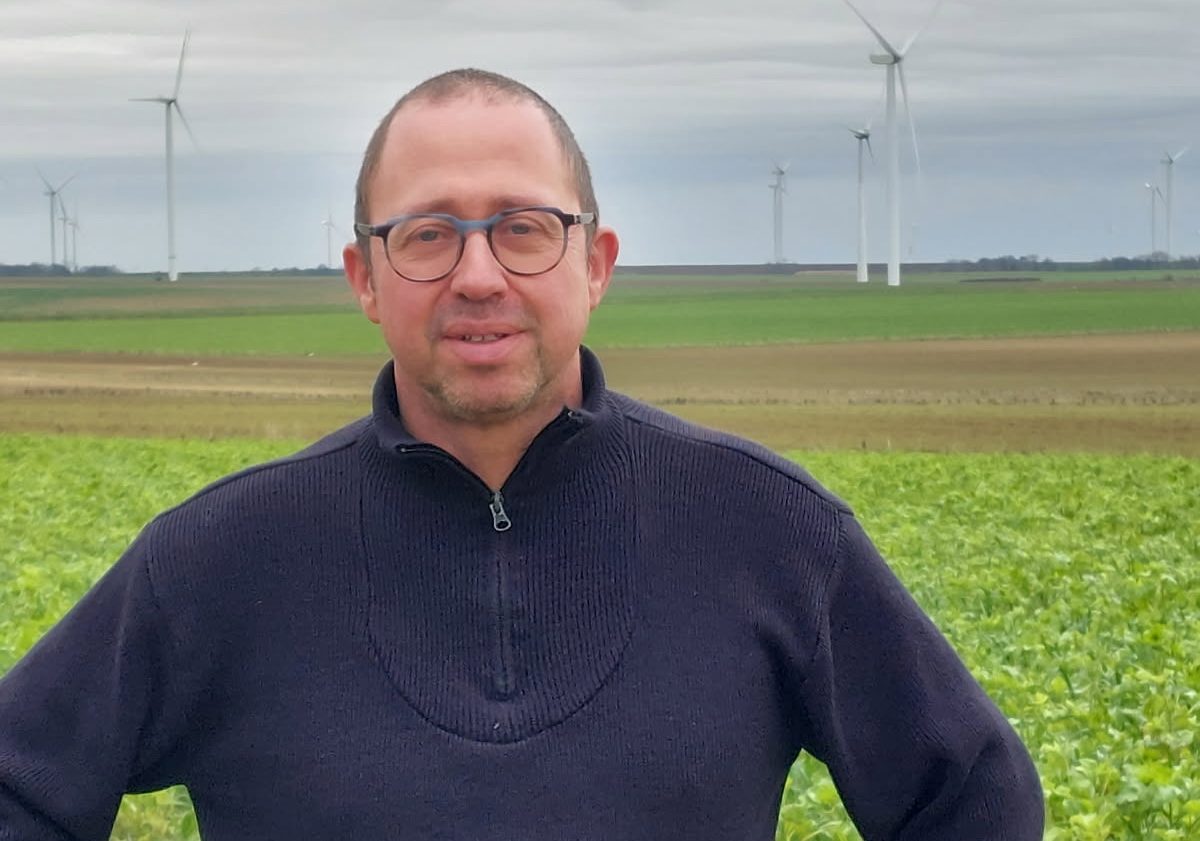
Philippe Vieville in northern France had dropped organic onions from his rotation because he could not find the labour to weed them. He grows them again now with FarmDroid. Manual weeding in a typical organic system runs 300 to 500 hours per hectare, but he managed to reduce them to under 100 hours. “The real game-changer is that the FarmDroid weeds before the crop even emerges,” he says. “That’s impossible by hand or with a traditional hoe.”
What the three investment cases show
Cost per hectare falls as the robot covers more ground, and the bigger today’s weeding bill, the faster the payback. The reason to invest is rarely only the saving, though.
If you grow organic, it is the hand weeding itself: the cost, and the hassle of finding people in the weeks when everyone else needs them, too. A robot does not have to be recruited. It stays in your field all season, harvest to harvest.
If you grow conventional, payback is slower, because the robot replaces herbicide rather than hand weeding. What changes the case for you is the herbicides. The list of approved plant protection substances keeps getting shorter. What is left costs more and works less well as weeds build resistance. The rules on what you may apply, and when, keep tightening. That is why mechanical weeding is worth a look now rather than later. Starting on fewer hectares, while you get to know the robot, means it is already working the season when you have to rely on it.