

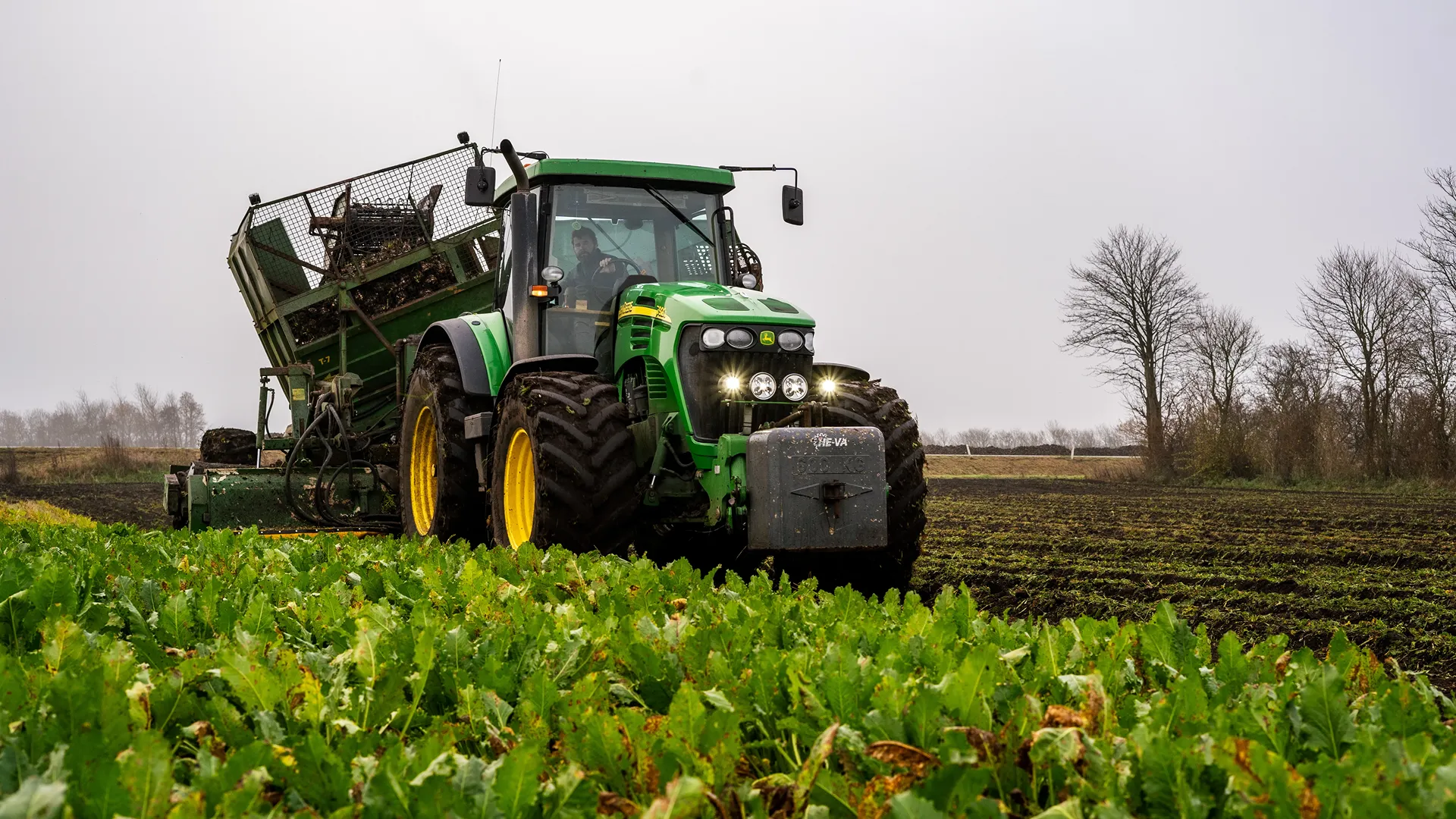
Sugar beet lifting starts within weeks across most of Europe. By the time the harvester goes into the field, there is nothing left to fix. How clean the field is, how even the roots are, and how much soil and green material leaves with them were all settled back in spring, in the seeding pass.
What 8 mm RTK GPS precision does
Sugar beet with a FarmDroid field robot is seeded at 2-3 cm depth, 16 to 22 cm between plants in the row, and 40 to 50 cm between rows, which on 50 cm rows puts the target stand at 90,000 to 125,000 plants per hectare. These are ordinary beet numbers.
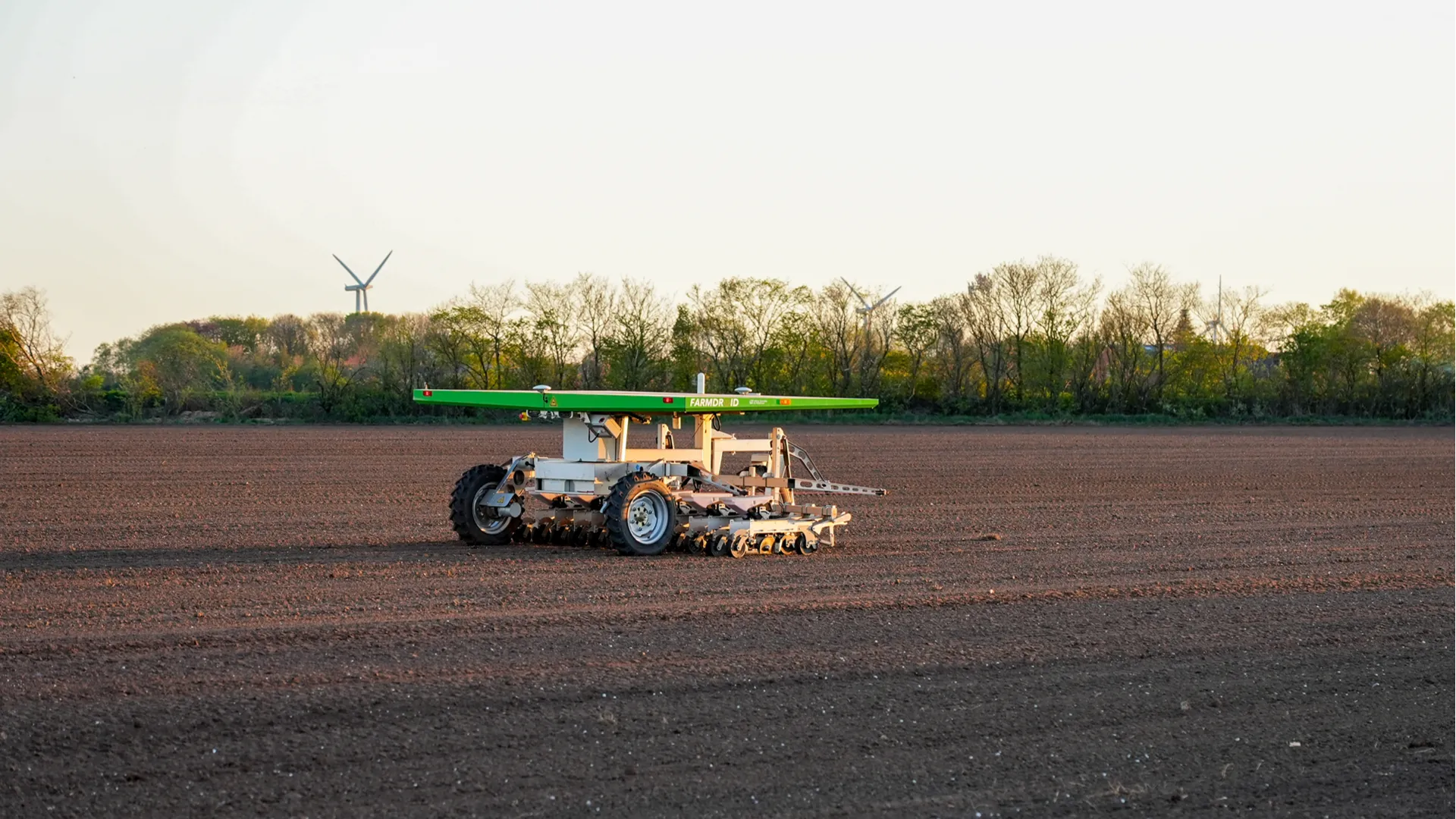
What is not ordinary is that the FarmDroid places every seed in the ground with 8 mm GPS precision against a base station standing within 10 km of the field. That coordinate map is the whole system. The robot never needs a camera to find the beet later in the season, because it is not looking for the beet. It already knows where the beet is, and that it has to clean both between the rows and inside the row itself, between the individual beets.
Clean rows start before the beets come up
Because the positions are known before anything is visible above ground, the first weeding pass can run before the crop emerges. In blind weeding the weeding wire sits roughly 2 cm above the seed and 2 cm to the left side of it, disturbing the soil and taking out germinating weeds while the beet is still below the surface. The wire can run that close only because the robot knows where every seed is. Set right, it cuts weed pressure in the later stages by around 50%.
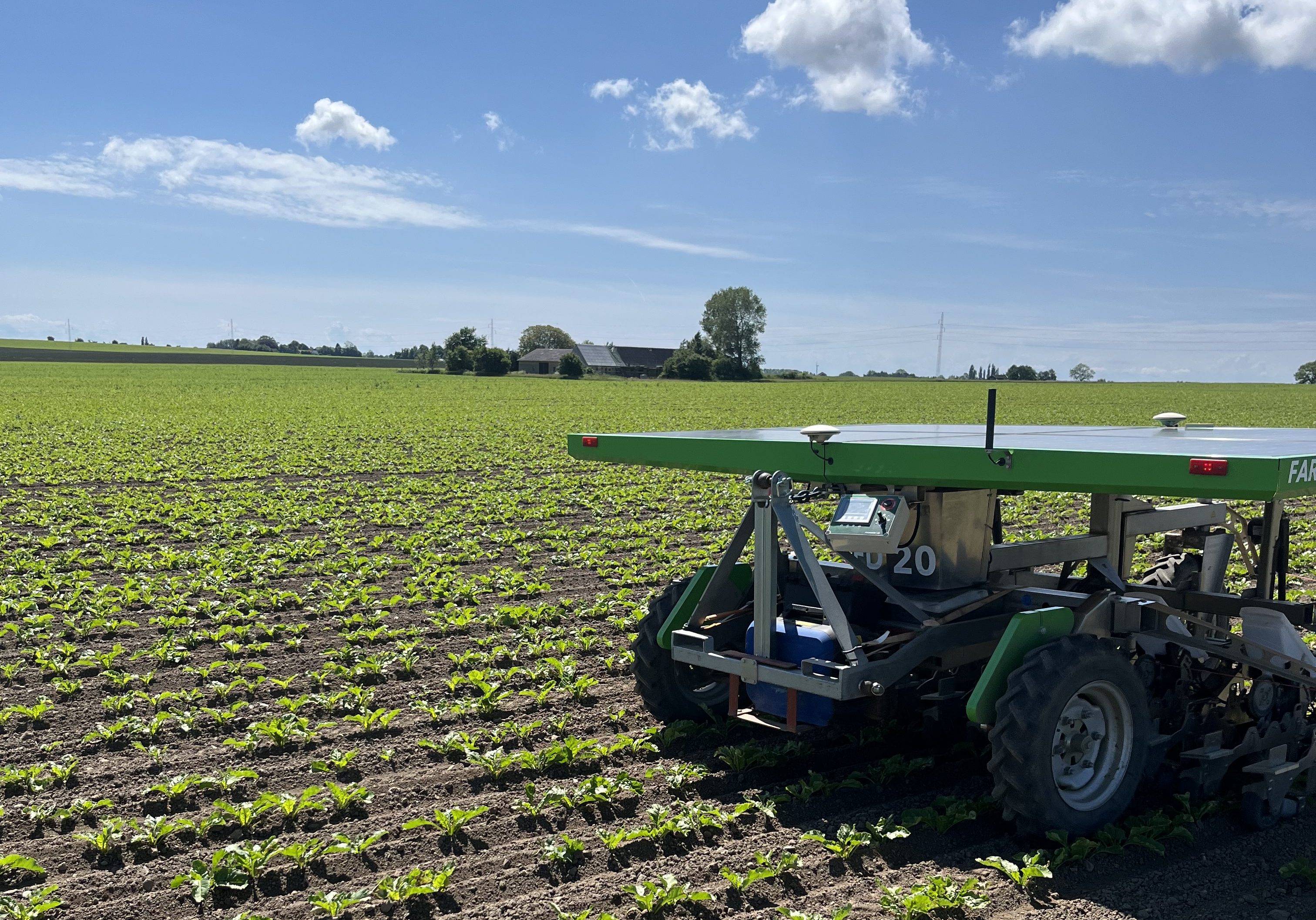
After emergence, it becomes a question of frequency. Weeds win on time; the robot wins on repetition. It’s important to keep mechanically weeding every week right up to canopy closure. No weed gets the uninterrupted window it needs to flower and set seed, which is what keeps next year’s weed pressure from being worse than this year’s. A pass rate like that behind a tractor would be a problem. A FarmDroid weighs far less than a tractor, so the passes that keep the row clean do not compact the soil.
Why a clean field is worth more at harvest
A clean field is easier to work in, and a field that is easy to work in is where top yield comes from. That shows up in two places when the beet comes out.
Even spacing gives even roots. Beet sown at a consistent in-row distance competes with itself evenly, so the crop reaches harvest with fewer oversized and undersized roots, and the topping and lifting units meet the size they were set for.
Fewer weeds mean less material through the machine. Green weed matter and the extra soil it carries slow the harvester down and leave the field on the trailer as tare instead of as beet.
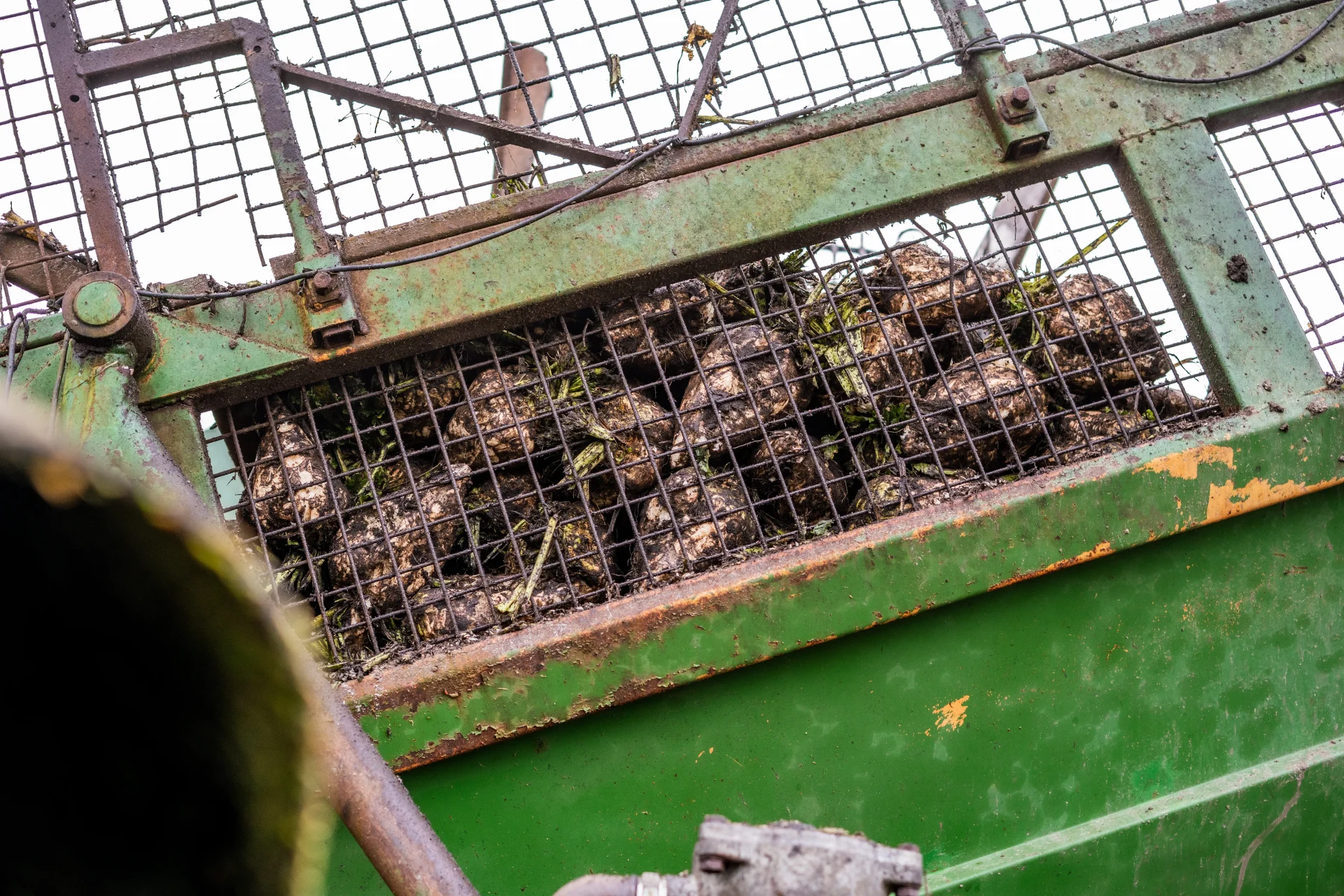
Both point the same way. A crop that never had to compete with weeds has had the whole season to put on weight. On well-suited crops, that can mean yields up to 40% higher.
Clean fields, even without herbicides
Weeding without herbicides has always been the organic grower’s challenge. However, it is now becoming the conventional grower’s too, as the list of approved herbicides in Europe keeps getting shorter. The fewer chemicals there are to reach for, the more of the job mechanical weeding has to carry.
Mechanical weeding is not the only solution for this challenge, and we will not pretend it is. What we can say is that it works at scale on real beet fields: more than 500 Farmdroid FD20 agricultural robots are at work in 26 countries, on organic and conventional farms, doing this same job season after season. For growers who need a chemical component in their program, FarmDroid +Spray doses plant protection onto the plant instead of across the whole field, and cuts chemical use by up to 94%. Our new field robot FarmDroid FD60 does the same mechanical work on larger fields. It carries no sprayer of its own, so growers who want a chemical component pair it with the sprayer they already run.
Row spacing configurations for your field
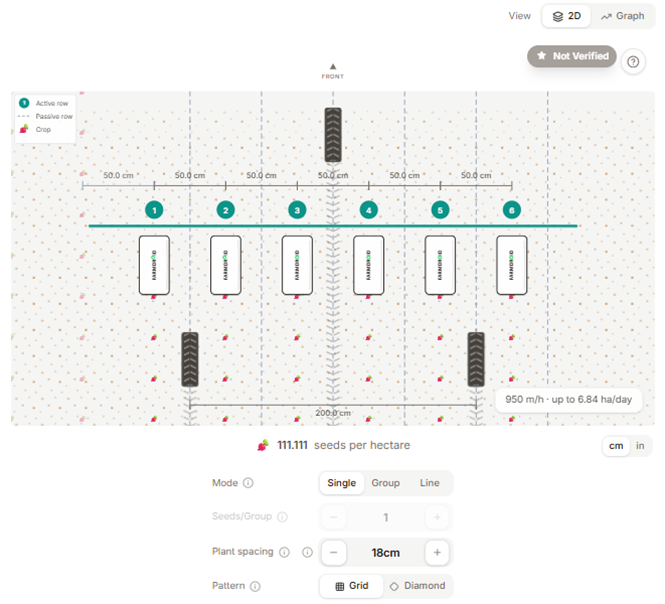
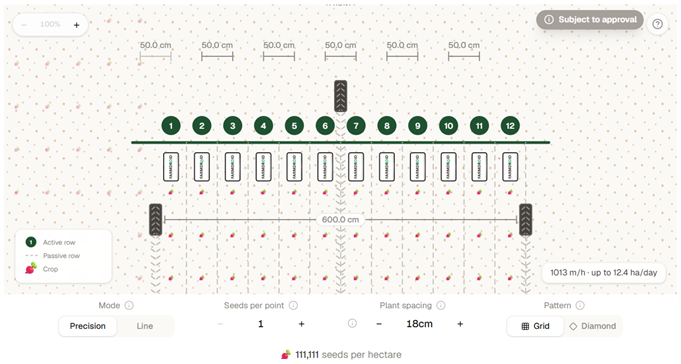
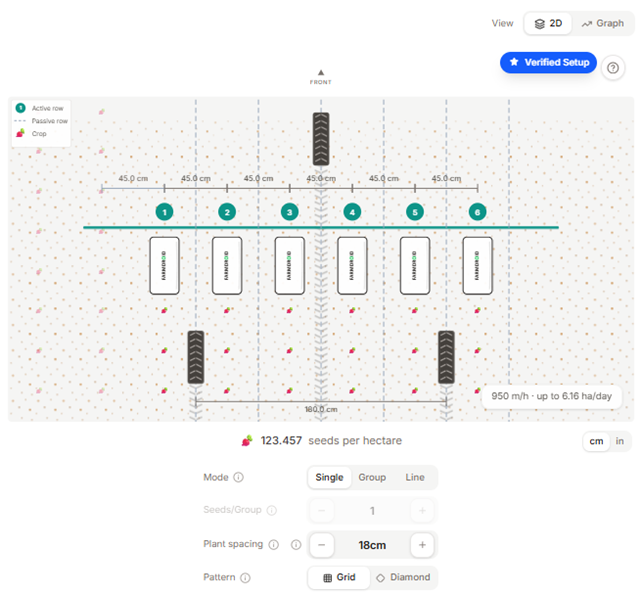
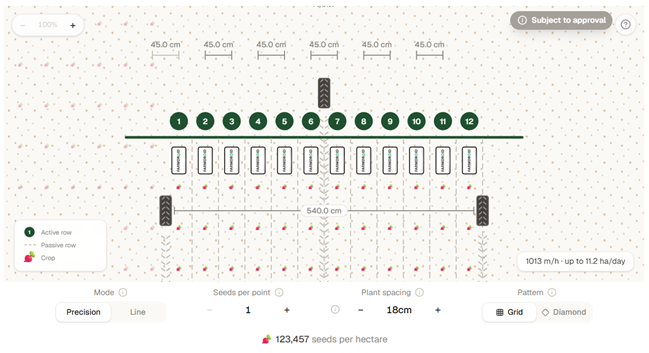
Beet row spacing should not be something you design around the robot. The two setups below are the ones a beet grower would actually use: 45 cm and 50 cm rows. Below you can see these configurations on both the FD20 and FD60, including the working width, the row count, and the in-row spacing.
Sugar beet at 50 cm row spacing
FD20 configuration
FD60 configuration
Sugar beet at 45 cm row spacing
FD20 configuration
FD60 configuration
FarmDroid robot places every seed to the same 8 mm precision, whichever spacing you choose. What separates Farmdroid FD20 and FarmDroid FD60 is how much ground they each cover in a season.
| FD20 | FD60 | |
| Seasonal capacity per crop | 20 ha | 60 ha |
| Row spacing | From 22.5 cm | From 25 cm |
| Rows | 2-12 | 2-20 |
| Working width | Up to 3.5 m | Up to 6.75 m |
Curious what a FarmDroid would look like in your field? Build your own in the FarmDroid configurator.