

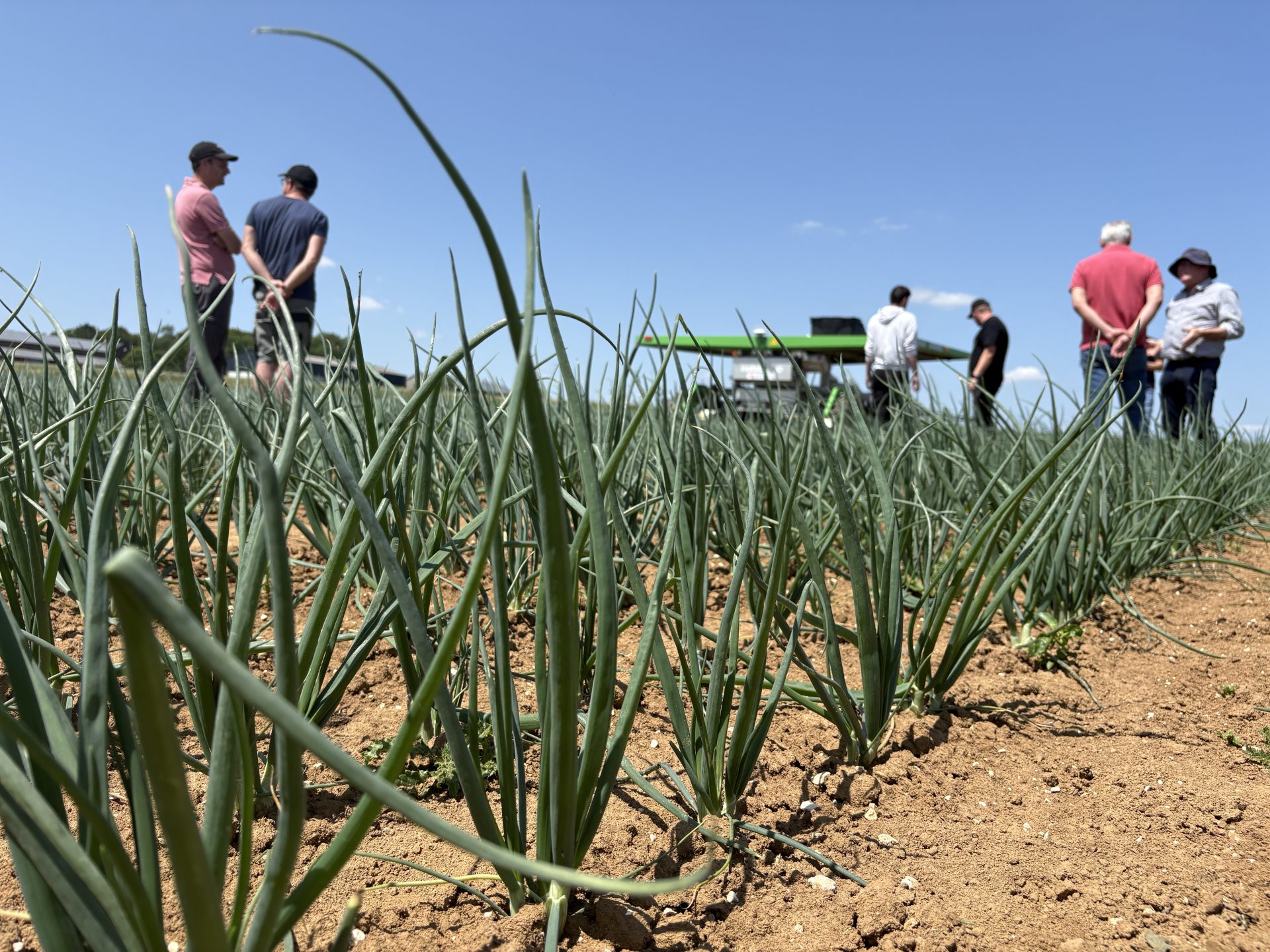
In the heart of the Aisne region in northern France, SCEA du Grand Caumont has been farming organically on a large scale since 2019. The 350-hectare farm, managed by Philippe Vieville, operates a diverse rotation including cereals, maize, oilseed rape, soybeans, peas, spinach, green beans, onions, and potatoes with around 50 hectares dedicated to vegetable production.
Maintaining high-value vegetable crops under organic conditions has never been simple. Like many organic growers, Philippe was increasingly constrained by one issue: weeding. Mechanical tools weren’t precise enough. Manual labor was increasingly harder to find. And after the transition to organic farming, some crops became difficult to justify not because of market demand, but because of what it took to keep fields clean.
Onions were the clearest example. Over time, they disappeared from the rotation as Philippe couldn’t find the manual labor he needed.
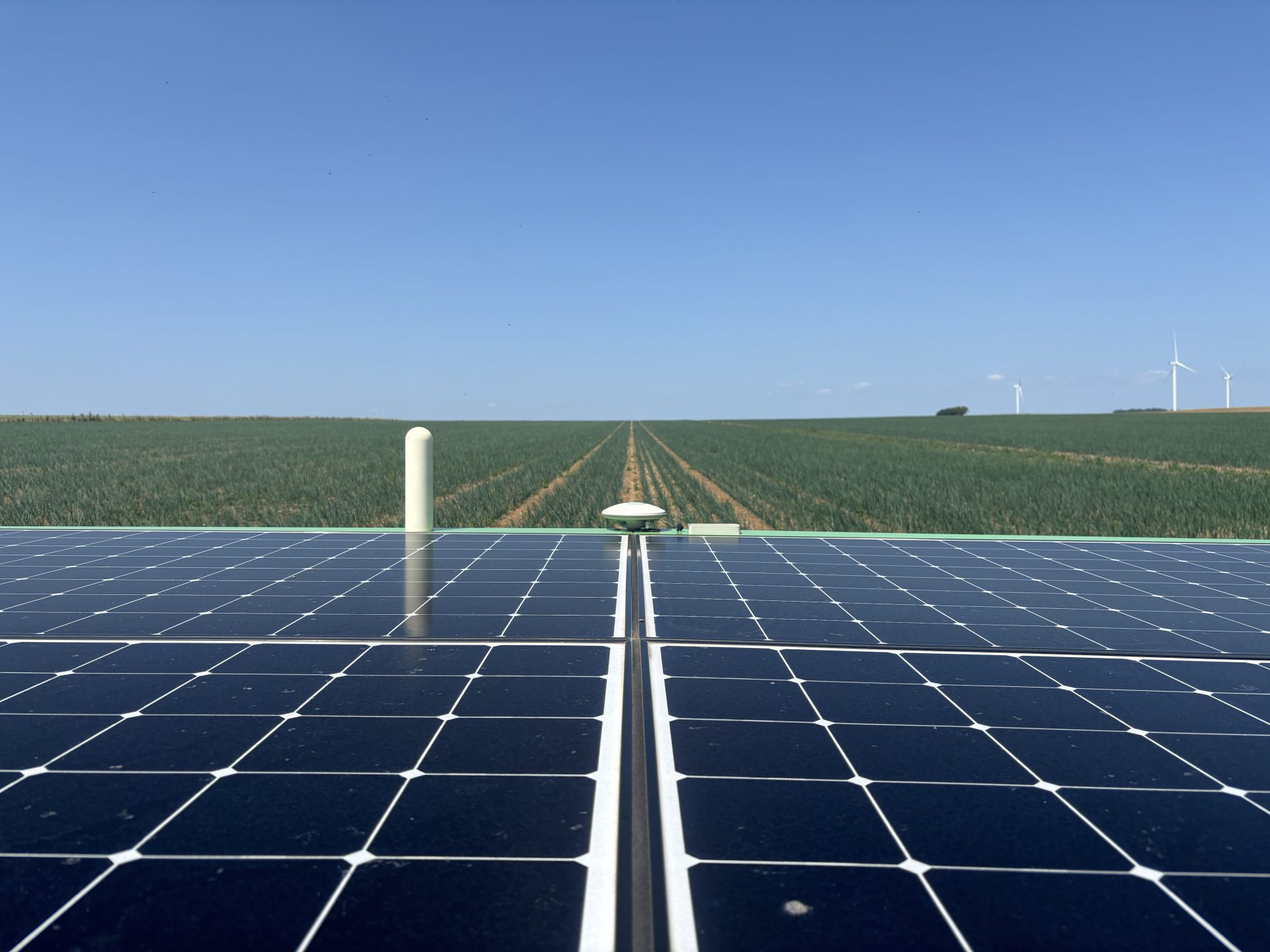
That turning point came in August 2024, when Philippe invested in a FarmDroid FD20, configured with three wheels. Finally, the weeding could be automized, and Philippe could restart growing organic onions.
Philippe’s results at a glance
- Organic onions reintroduced into the rotation
- Less than 100 hours of manual weeding used per hectare on onions (compared to 300-500 hours)
- Manual work cut in half on weeding spinach
- Around €50,000 saved per year in manual labor alone
- Payback achieved by year two with a 50% subsidy
From labor bottleneck to automatic weeding
The FarmDroid was first deployed on 10 hectares of onions, 10 hectares of spring spinach, and 10 hectares of autumn spinach. In July, when the robot is typically not occupied, Philippe also tested it on green beans. “The trials were very promising. We’re planning to add five more hectares of green beans next year.” says Philippe and mentions his plan to keep the robot running productively throughout the season.
Today, the FarmDroid FD20 handles around 30 hectares per year, with a target of 35 hectares in 2026, supported by the robot’s new bigger seeding system.
Before FarmDroid, the real challenge started after seeding, when it was time to weed organic crops. “It was a nightmare, especially when the plants were young and fragile. The real game-changer is that the FarmDroid weeds before the crop even emerges. That’s impossible by hand or with a traditional hoe.”
That early weeding changed everything. With weeds controlled from day one, organic onion production became realistic again.
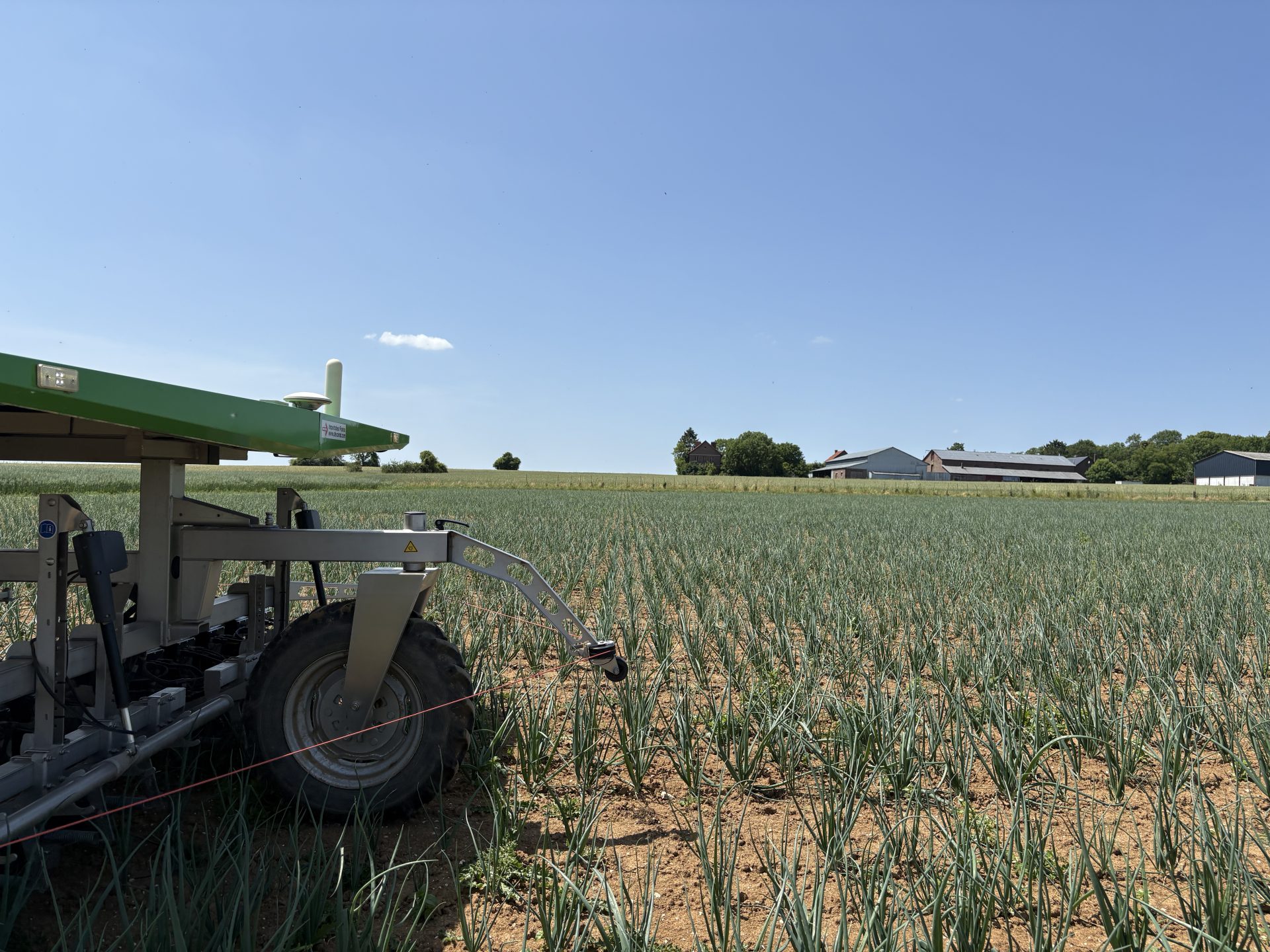
“Seeing it work is believing it”
Philippe’s decision to choose FarmDroid came after seeing the robot in action on a neighboring farm just a few kilometers away.
“They were testing it on chicory, and I immediately understood the advantage. The combination of precision seeding and pre-emergence weeding is unbeatable.”
What convinced him was not just the concept, it was the execution.
“As soon as seeding is done, the robot starts weeding, so it always stays one step ahead of the weeds. On top of that, it’s fully automatic, fuel-free, lightweight, and extremely precise. Honestly, seeing it work is believing it. That’s when you realize how independent it really is, especially during the early growth stages.”
A robot that fits into the whole season
At SCEA du Grand Caumont, the FarmDroid is planned into the season and kept active as much as possible, alternating from seeding to weeding.
- End of March: Onion seeding, followed by around six weeding passes between April and May
- Late May to early July: Spring spinach seeding and four to five weeding passes
- July: Green bean trials to keep the robot productive during summer
- Late August to late September: Autumn spinach seeding and four to five weeding passes
Precision farming in practice
Before switching to FarmDroid, Philippe seeded spinach with a grain drill. Emergence was irregular, precision was limited, and weeding was difficult.
With the FarmDroid, both seeding and weeding changed.
“Now, with the FarmDroid, seeding is highly precise, and the robot weeds within 3 cm of the row, compared to 8 cm before. That precision makes a huge difference.”
Best practices for onions: adapting the crop to the robot
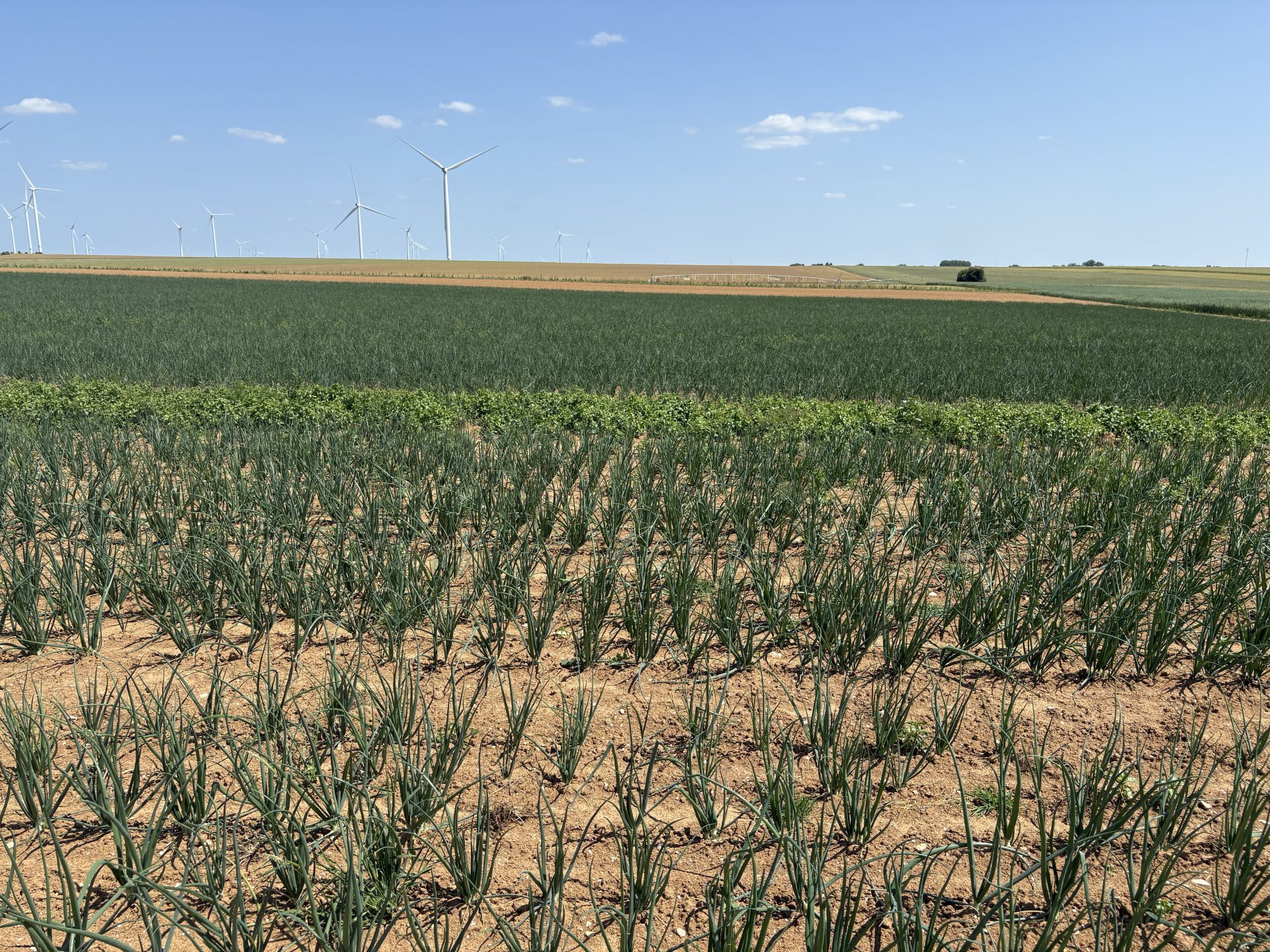
Onions are where FarmDroid has delivered the biggest impact for Philippe, right after adapting the crop layout to the robot’s strengths.
Philippe now works with 1.80 m beds, planting five rows spaced 30 cm apart, instead of the traditional 45–50 cm. Seeding is done in clusters of four seeds every 18 cm, maintaining density while still leaving enough room for the robot to weed between plants.
“It’s the only machine on the market that can both seed this way and weed between onion rows without damaging the plants,” he says.
As confidence in the robot grew, so did Philippe’s willingness to push precision further. He is now considering reducing the number of seeds per cluster and tightening spacing further.
“Once seeding is done, the robot should immediately start weeding, even before emergence,” he explains. “That reactivity is key. It should never stand still. That’s how you get the most out of its autonomy and accuracy.”
Getting started with FarmDroid: installation and learning curve
The FarmDroid FD20 arrived in August 2024, followed by on-farm setup and training with a technician. They started on a rapeseed field, just to get familiar with the robot before moving on to spinach.
During the first day, the technician mapped the field, installed the RTK base station, and provided full training.
“There were a few small issues at the beginning, which is normal with any new technology,” Philippe says. “But it helped me really understand how the robot works before using it on the main crops.”
Technical support played a key role in Philippe’s positive experience with FarmDroid. “The technical support is excellent. You can reach someone easily, and most issues are solved remotely.”
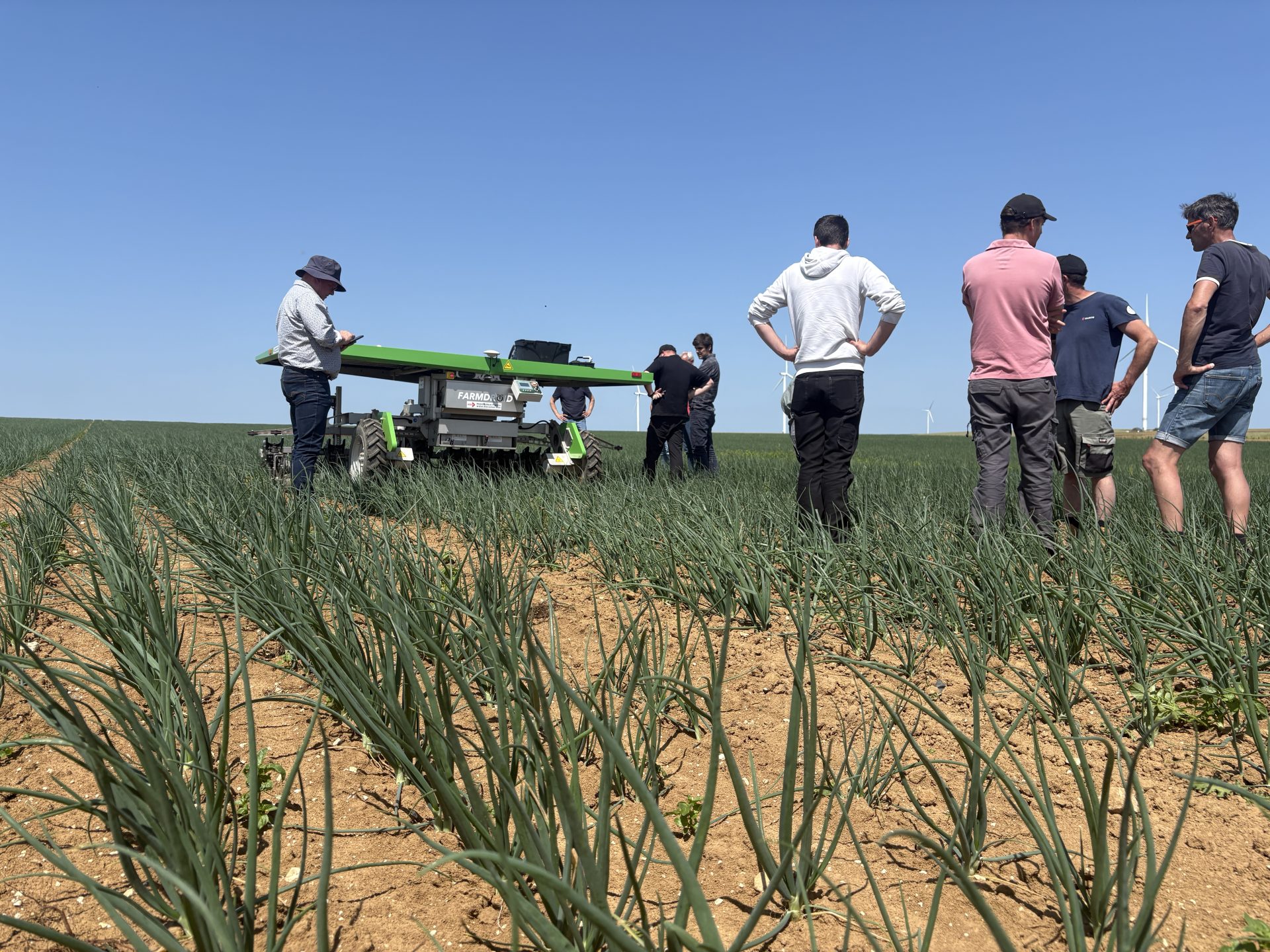
Why soil preparation makes or breaks robotic weeding
Using FarmDroid requires a shift in mindset, especially when it comes to soil preparation.
On Philippe’s farm, ploughing before seeding is now mandatory to eliminate plant residues. This is followed by two or three passes with tine cultivators and rollers to level and firm the soil.
He also found that watering lightly before working the soil helps retain moisture and ensures more even crop emergence. It is particularly important for onions.
“With FarmDroid, everything starts with the soil,” he says.
Supervision and maintenance: simple and predictable
At the start of the season, when sunlight isn’t sufficient to power the robot continuously for the whole day, Philippe swaps the battery each morning. One battery works in the field while the other recharges at the farm.
Most supervision happens through the FarmDroid app, which allows him to monitor operations remotely. During seeding, he stays more alert to make sure everything runs smoothly so he can relax more during the weeding.
“Now, I trust it completely.” Philippe says about weeding.
Our partner in France performs a full inspection once a year in winter. After one season, Philippe only had to replace a weeding motor and a few wear parts, with no major surprises.
Clear results and a fast return on investment
The biggest gains have come from reduced manual labor.
On spinach, Philippe saves around 50 hours of manual work per hectare, which equals roughly €10,000 per year. On onions, the effect is even more pronounced. Compared to typical organic systems requiring 300–500 hours of manual weeding per hectare, Philippe is now down to under 100 hours. That difference adds up to at least 200 hours saved per hectare, or roughly €40,000 per year on onions alone.
“With a 50% subsidy, the FarmDroid will be profitable by the second year. Overall, I estimate around €50,000 saved per year just on labor, and I’m not even counting fuel savings.”
Beyond the numbers, there is something harder to measure:
“The bonus is peace of mind.”
One last piece of advice for other onion growers
For growers considering a FarmDroid, Philippe’s advice is clear:
“Honestly, don’t hesitate! Go and see the robot in action. That’s the best way to understand its benefits, especially for weeding and labor savings.”
The robot didn’t just reduce workload. It changed what was possible on his farm.
“The learning curve is short, but it takes a full weeding cycle on a crop to truly understand how to optimize its performance. And don’t be afraid to be ‘aggressive’ in your weeding strategy. The robot is so precise that you can safely reduce the unworked strip, even if you lose a few plants.”
Lastly, if Philippe had to summarize his experience in three words, he would choose:
“Autonomy. Precision. Peace of mind.“