

The 2026 season is well underway. Right now, FarmDroid FD20s are working in fields across the world, especially Europe. Sugar beet, onions, sorghum, black cumin, lentils and flowers, green beans and chicory is just a handful of the different crops FarmDroid is working in the Netherlands, Denmark, Germany, France, Italy, United Kingdom and Austria.
The crops are different. The soils are different. Some farms are fully organic. Others are cutting herbicide use step by step. But in all of these fields, the approach is the same: seed with precision, weed often, keep the robot moving.
Here is a look at how the FD20 works across different crops and growing conditions – and what that means in practice.
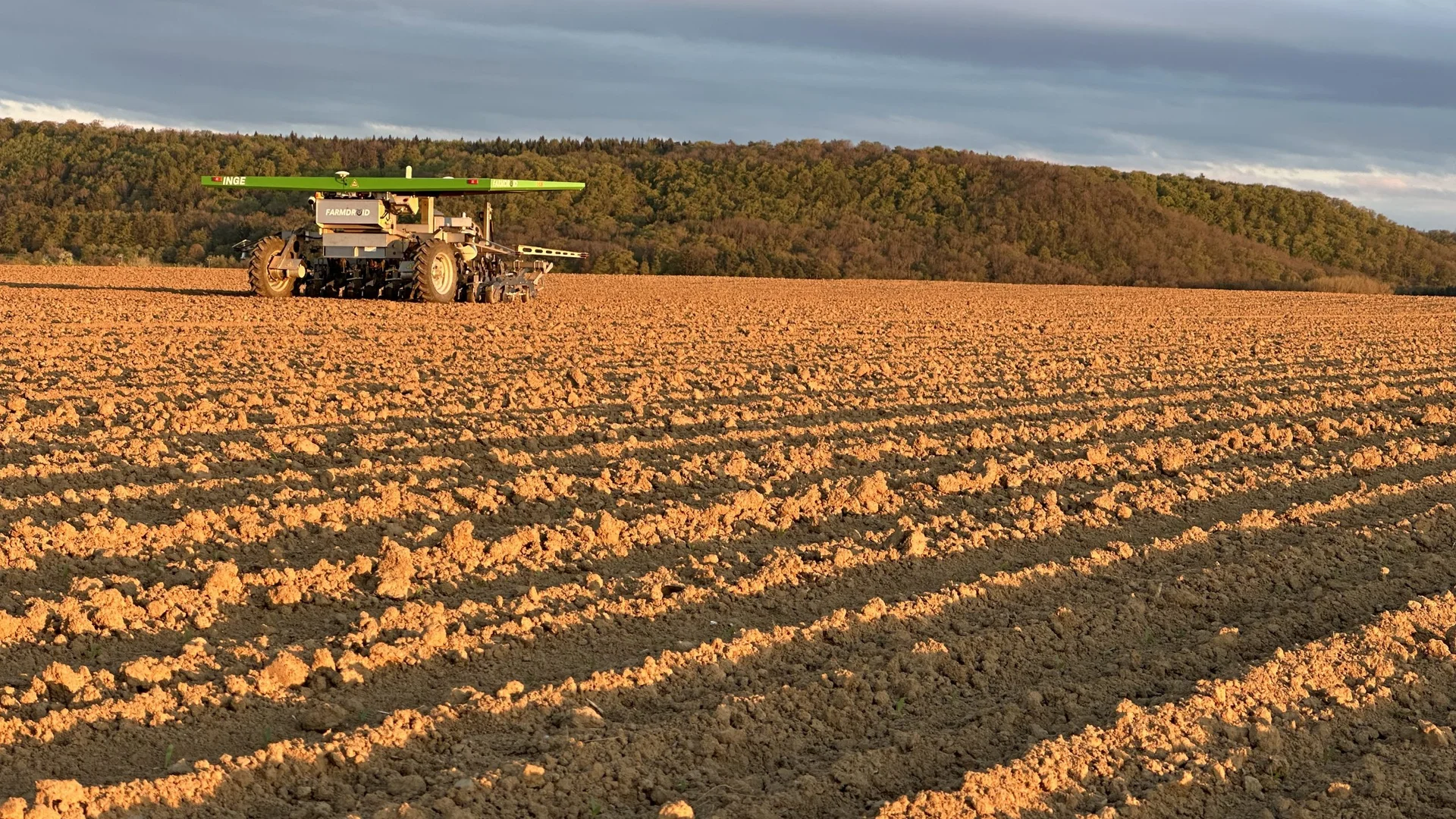
Sugar beet: the most common crop
Sugar beet is where most FarmDroid farmers start, and it is still the most widely grown crop with the FarmDroid FD20. It is a good fit. Sugar beet has high weed pressure early in the season, and the plants are slow to grow large enough to compete. Without regular weeding, the crop suffers quickly.
The FD20 can start weeding before the sugar beet has even come up. This is called blind weeding. The robot passes over the field and disturbs the top few centimetres of soil. This breaks up the surface and kills young weeds before they can establish. Done well, it cuts the total weed problem for the season drastically. For organic growers who have no herbicide to fall back on, getting that first pass right is very important.
After that, the robot passes every 5 to 10 days throughout the season. By the time the plants grow large enough to cover the ground, most of the weeding is already done.
Soil conditions vary a lot across Europe. On the light sandy soils of northern France and Germany, the field can be easy to prepare and the robot moves well. On heavier soils, it pays to wait until the soil has firmed up after rain before sending the robot in. At 1,250 kg, the FarmDroid FD20 is far lighter than a tractor, which means less damage to the soil structure – and growers can often get in sooner than they expect.
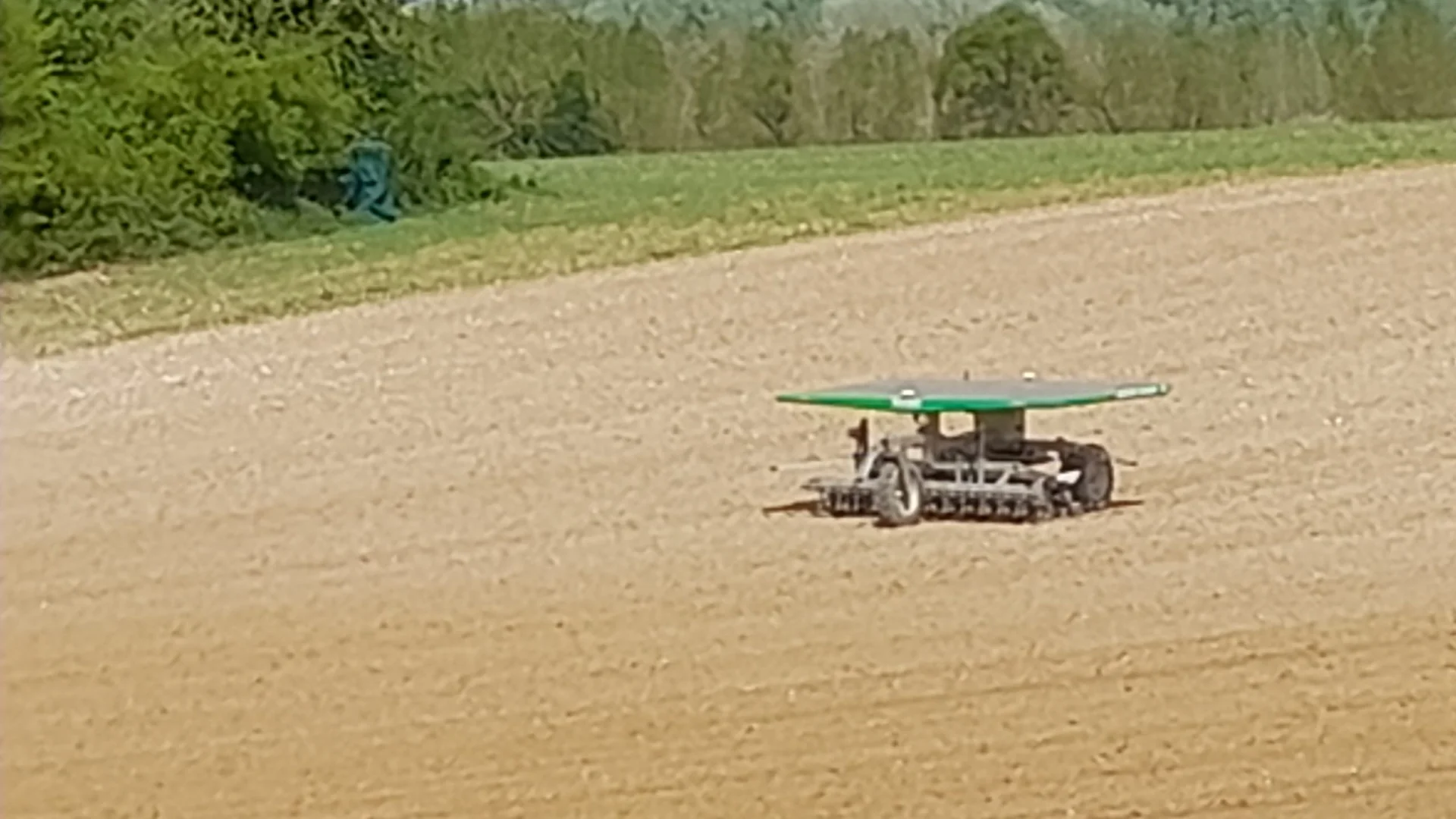
Onions: the hardest crop on the list
Onion is the most demanding crop to grow with a FarmDroid. Onion plants grow slowly and cannot compete with weeds for a long time. If weeds get ahead in the first weeks, the harvest will show it. That means the robot needs to be in the field from the first week after the plants come up – and it needs to keep going.
For organic onion growers, the alternative used to be several hundred hours of hand weeding per hectare every season. Not a fun summer.
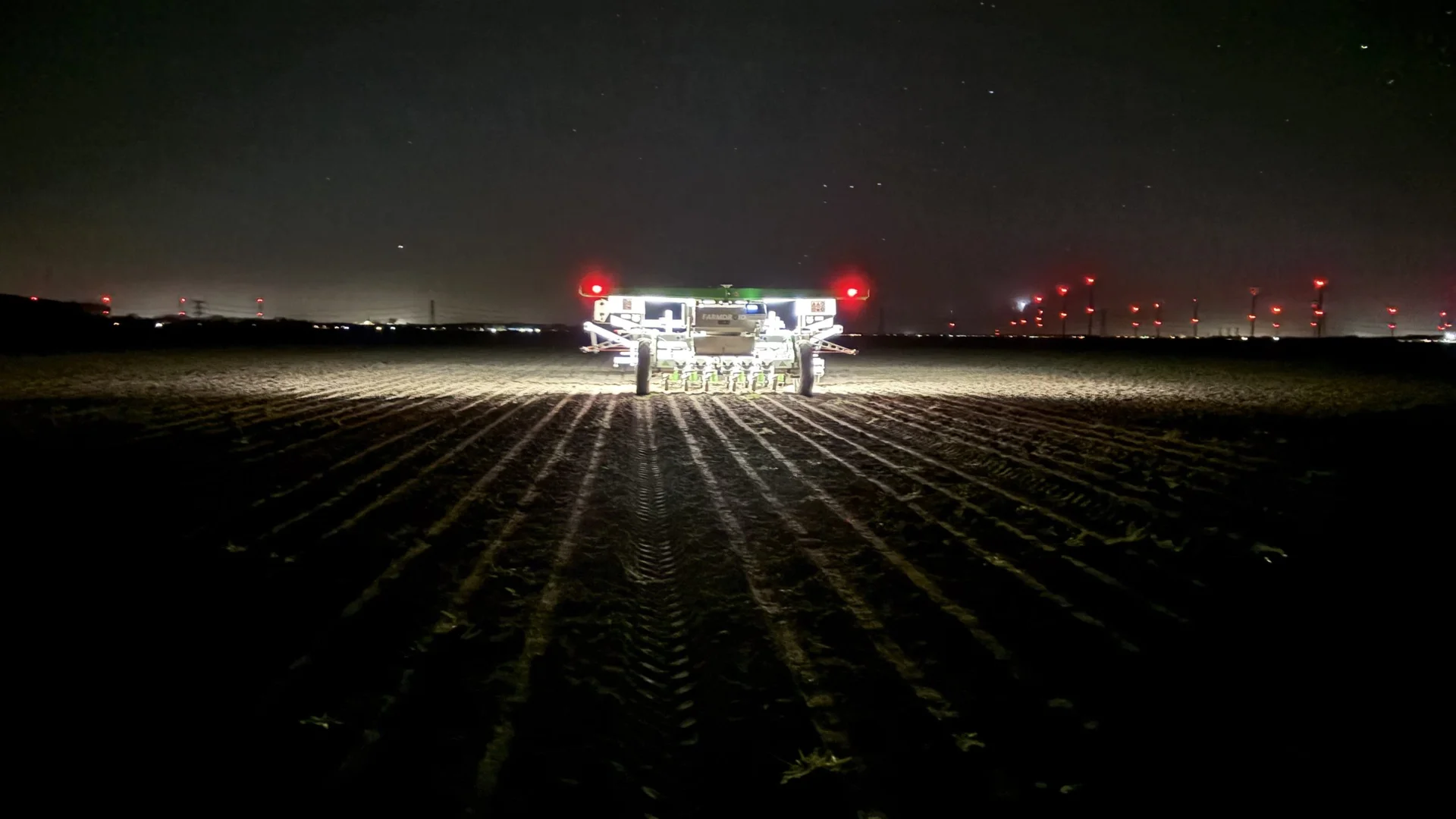
The FD20 runs on solar power and works 18 to 24 hours a day. It keeps going through the night while the farmer sleeps.
For onions, FarmDroid uses cluster seeding – placing 5 to 9 seeds close together at each position. The cluster size can be adjusted depending on what size bulbs the farmer is selling into.
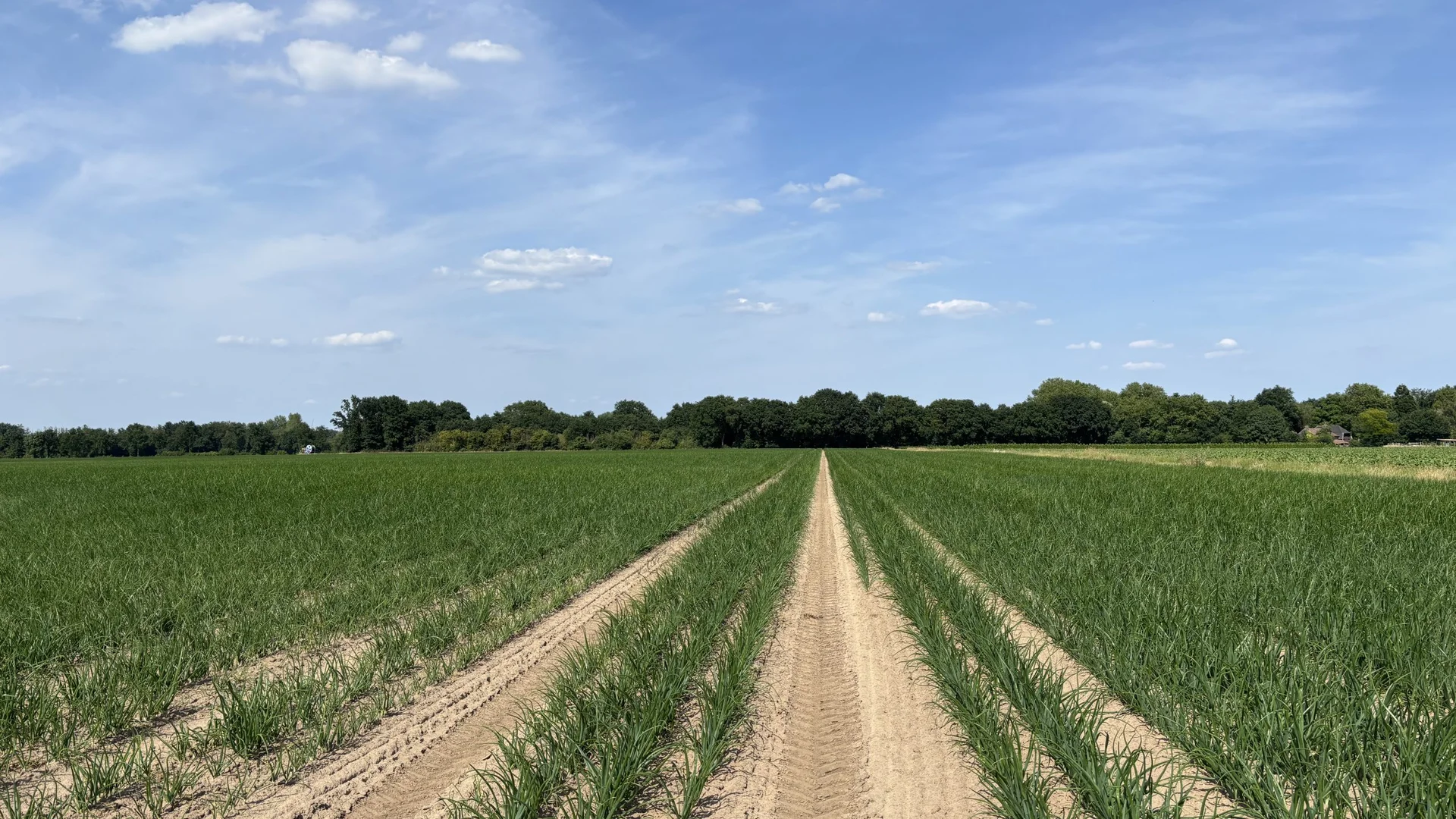
In some parts of the Netherlands, where FarmDroid is working, the soil is typically light and sandy. Water drains quickly, which means growers can get the robot back in the field sooner after rain. Several FarmDroid onion farmers are running in these conditions this season.
The photo below was taken at midnight and shared by one of our farmers 💪
Red beet and other root crops
Some farmers grow more than one root crop on the same farm. Sugar beet and red beet together is one common combination. Chicory is another root crop that works well with the FD20.
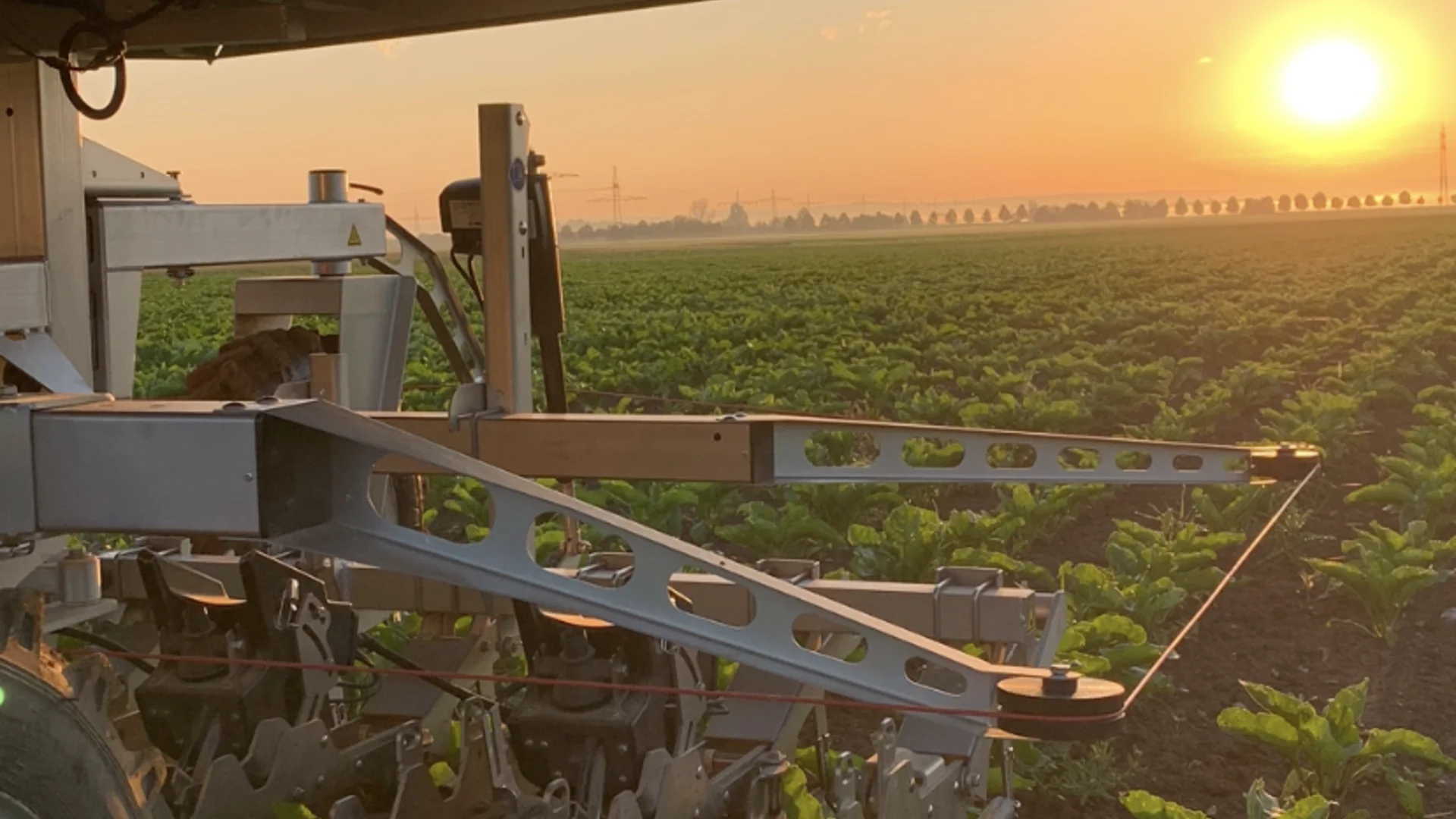
These crops all follow a similar pattern. The seeding depth is roughly the same. The weeding schedule works the same way. The main difference is the spacing between plants, which means changing the seed disc when switching between crops. Red beet, chicory, and carrot all benefit from early blind weeding, just like sugar beet.
Less common crops: black cumin, lentils, sorghum, flowers
Not every FD20 in the 2026 season is on sugar beet or onions. In Austria, one farmer is growing black cumin. In Denmark, the robot is running on lentils. In Italy, sorghum. In the UK, flowers and callaloo.
These crops are possible because of the Seed Lab. Before growing a new crop with the FD20, farmers send a seed sample to FarmDroid. We check that the seed works with the disc and that the robot can place it at 8 mm precision. If it works, the crop goes on the validated list – which now covers more than 100 crops.
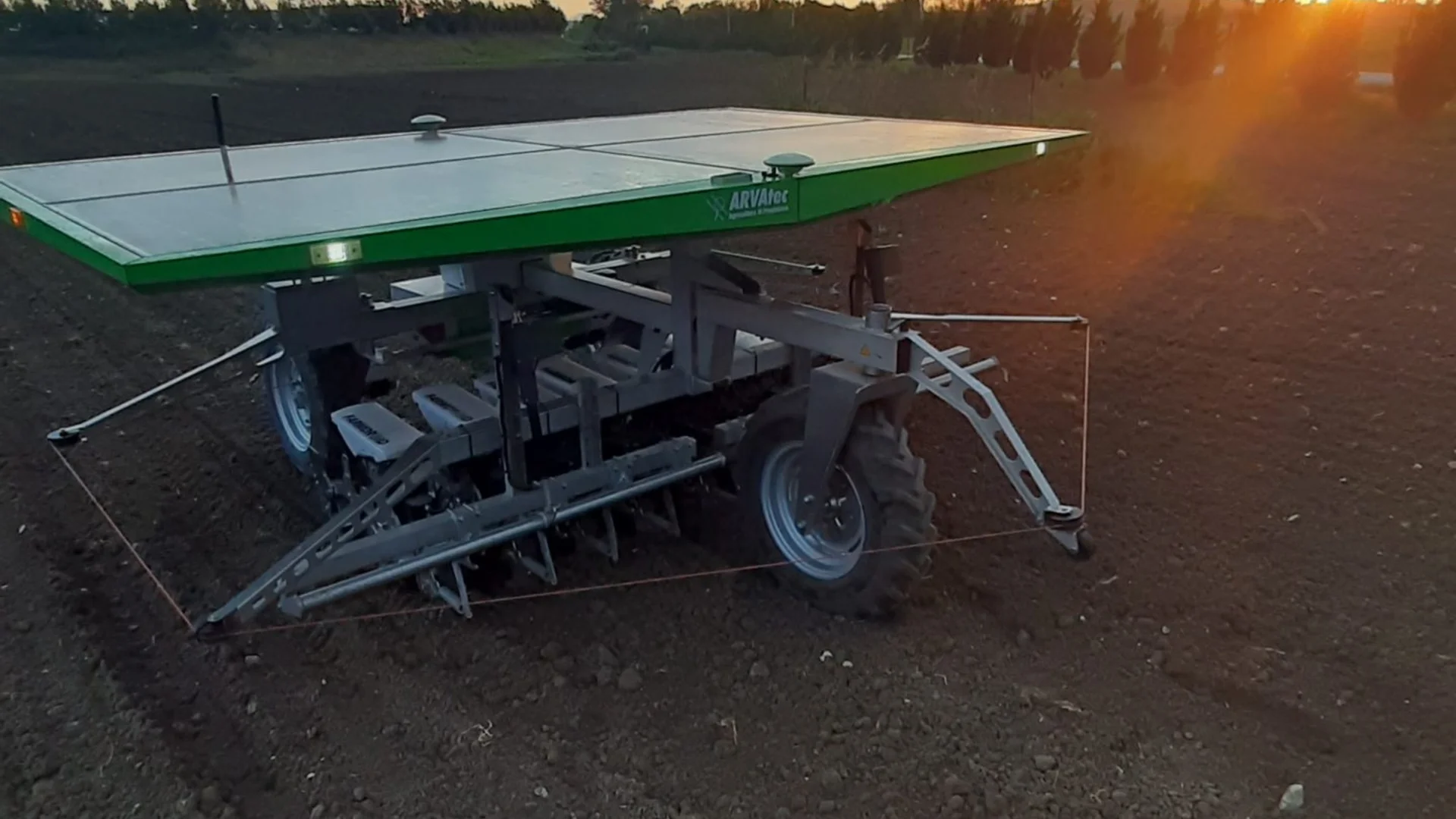
Sorghum grows tall, but it starts small. The key is controlling weeds in the early weeks, before the sorghum plants get big enough to shade the ground on their own. In northern Italy, the summers are hot and the soil dries quickly. Running the robot through the night adds hours when the temperature is lower and conditions are better for working.
Soils: what changes, what stays the same
European soils are very different from one country to the next. There is difference between light sandy soils that warm up early in spring and drain quickly. Heavier soils hold water longer – after rain, the field takes more time to firm up. In southern of Europe soils dry fast in summer heat.
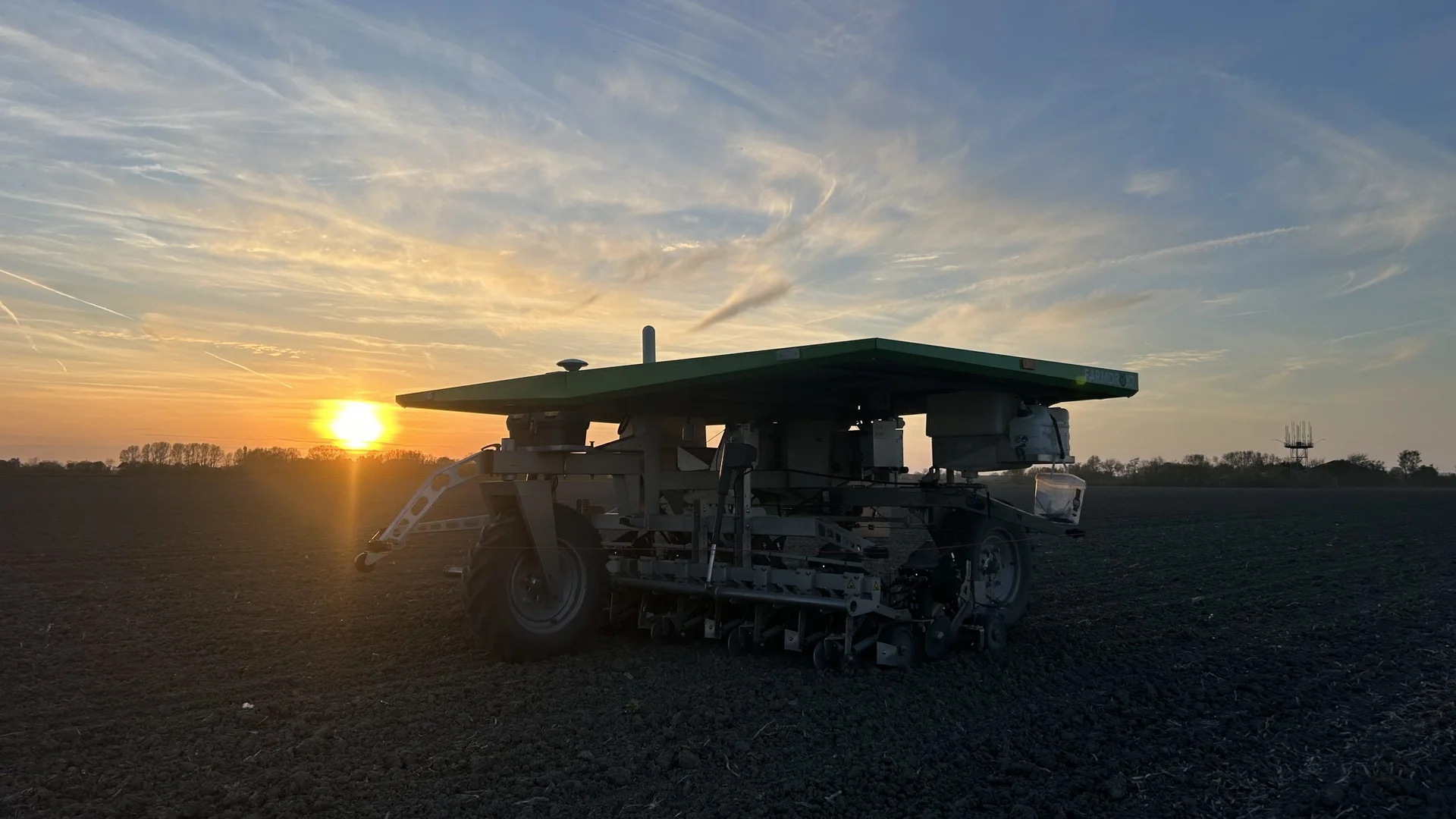
The FD20 adapts to these differences through a few practical settings. Tyre pressure and ballast weights can be adjusted for grip in soft or loose ground. Seeding depth is set to match the soil structure. Running through the night is especially useful in hot climates, where the robot picks up hours that the heat of the day makes harder.
What does not change with soil type is the GPS precision. The base station is set up within 10 km of the field, the correction signal runs all season, and the robot holds its RTK-GPS position to 8 mm.
FarmDroid Care monitors robots 18 hours a day during the growing season. Whatever the soil and whatever the country, the support is the same.
Share your photos from the 2026 season
Are you growing with FarmDroid this year? We want to see your field. Share your photos and be part of the 2026 season overview – and you could win a prize.